
WE-ATTACH / EXCAVATOR ATTACHMENTS
Technical Guides
Explore source-linked selection and purchase information.
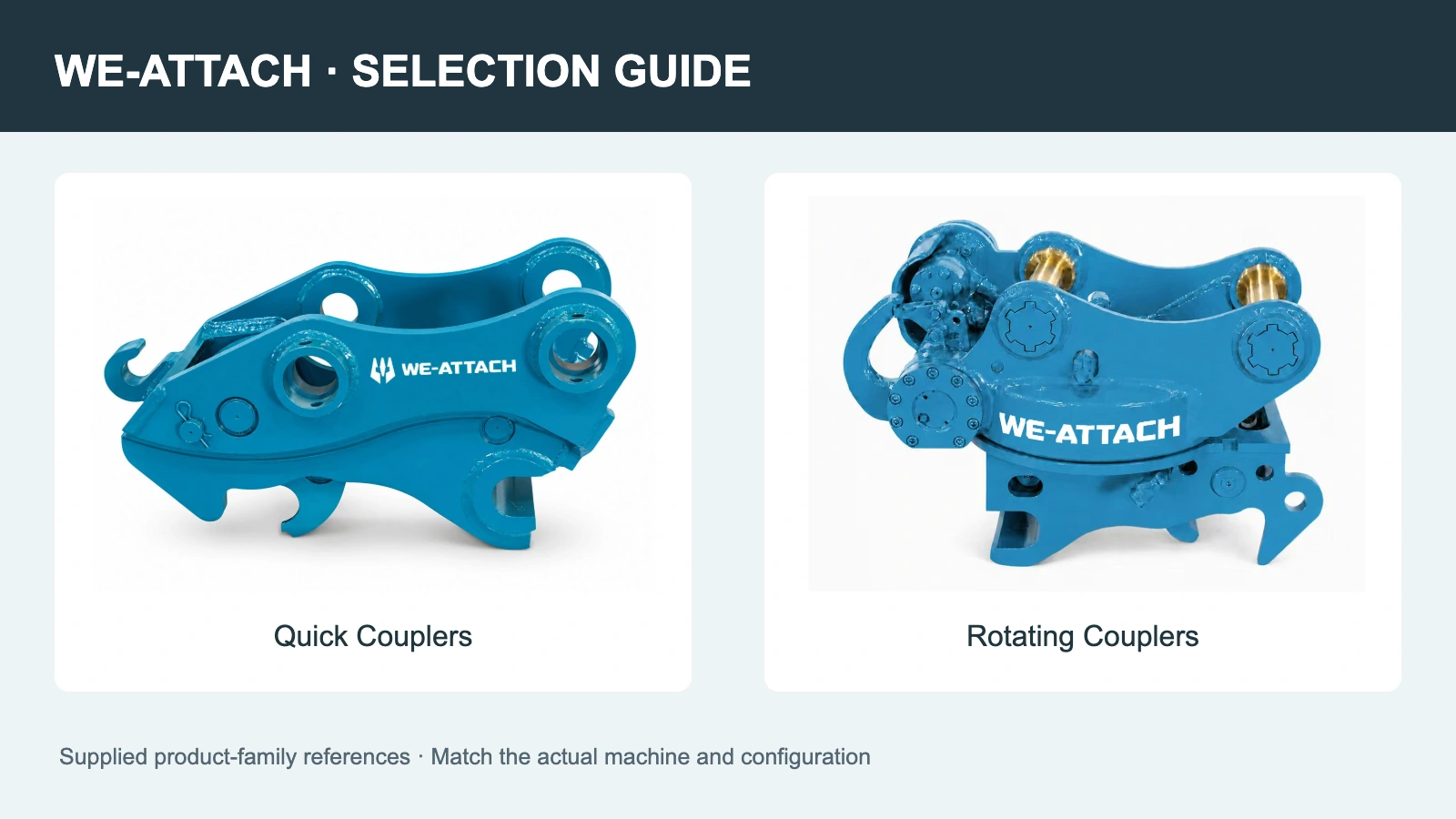
Quick coupler types and configuration review
The supplied WHC, WCQ, WDQ, WSQ, WTD, WTS and WRQ pages distinguish hydraulic, cast, double-lock, tilting and rotating types. Rotation and tilt are different functions; a rotating quick coupler is not automatically a tiltrotator.
Explore ↗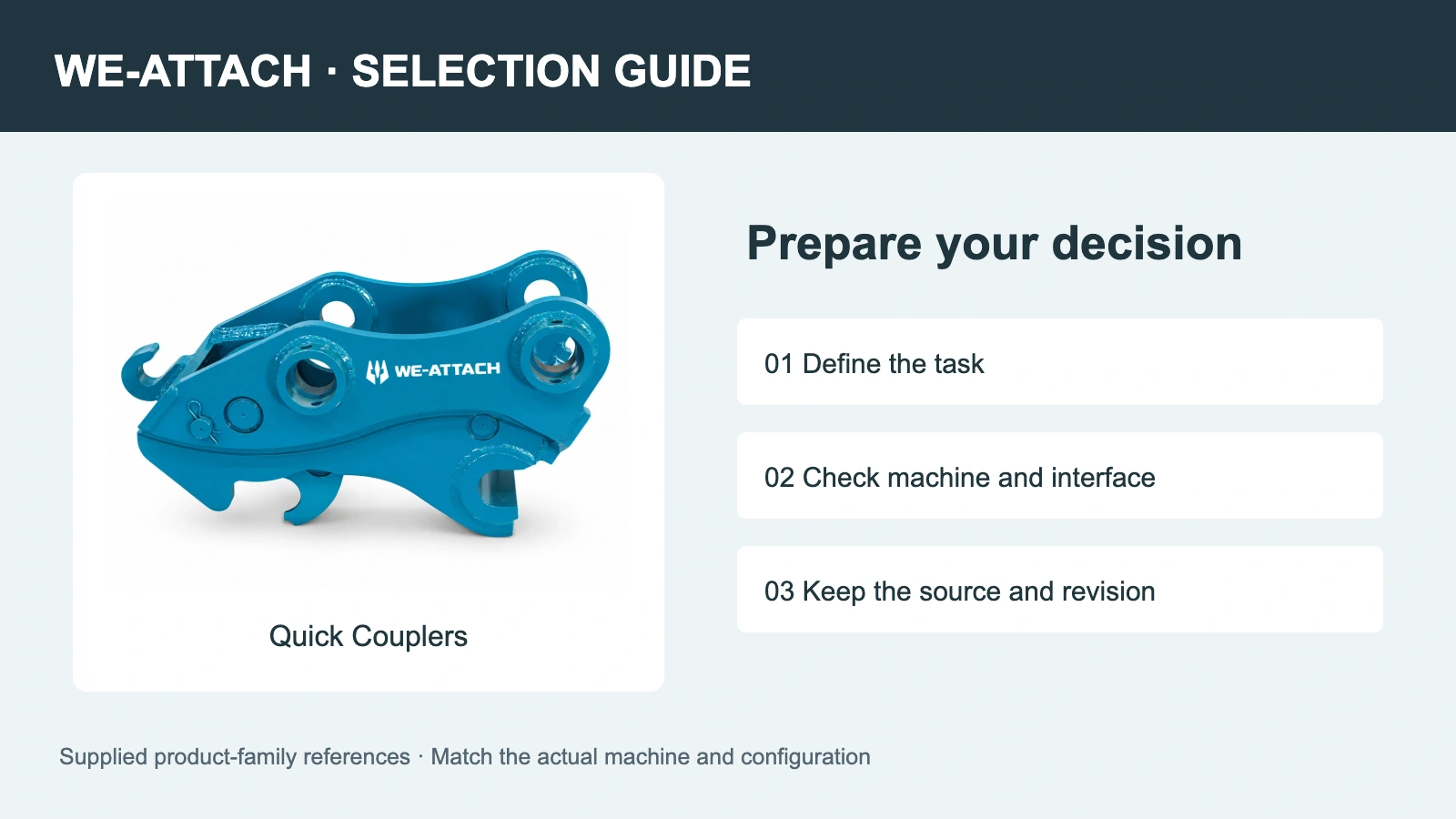
How to prepare quick coupler measurements
The pre-order form identifies front and rear pin diameters A1/A2, centre distance B and widths C1/C2. Record what each width measures, include units and attach labelled photographs or a drawing.
Explore ↗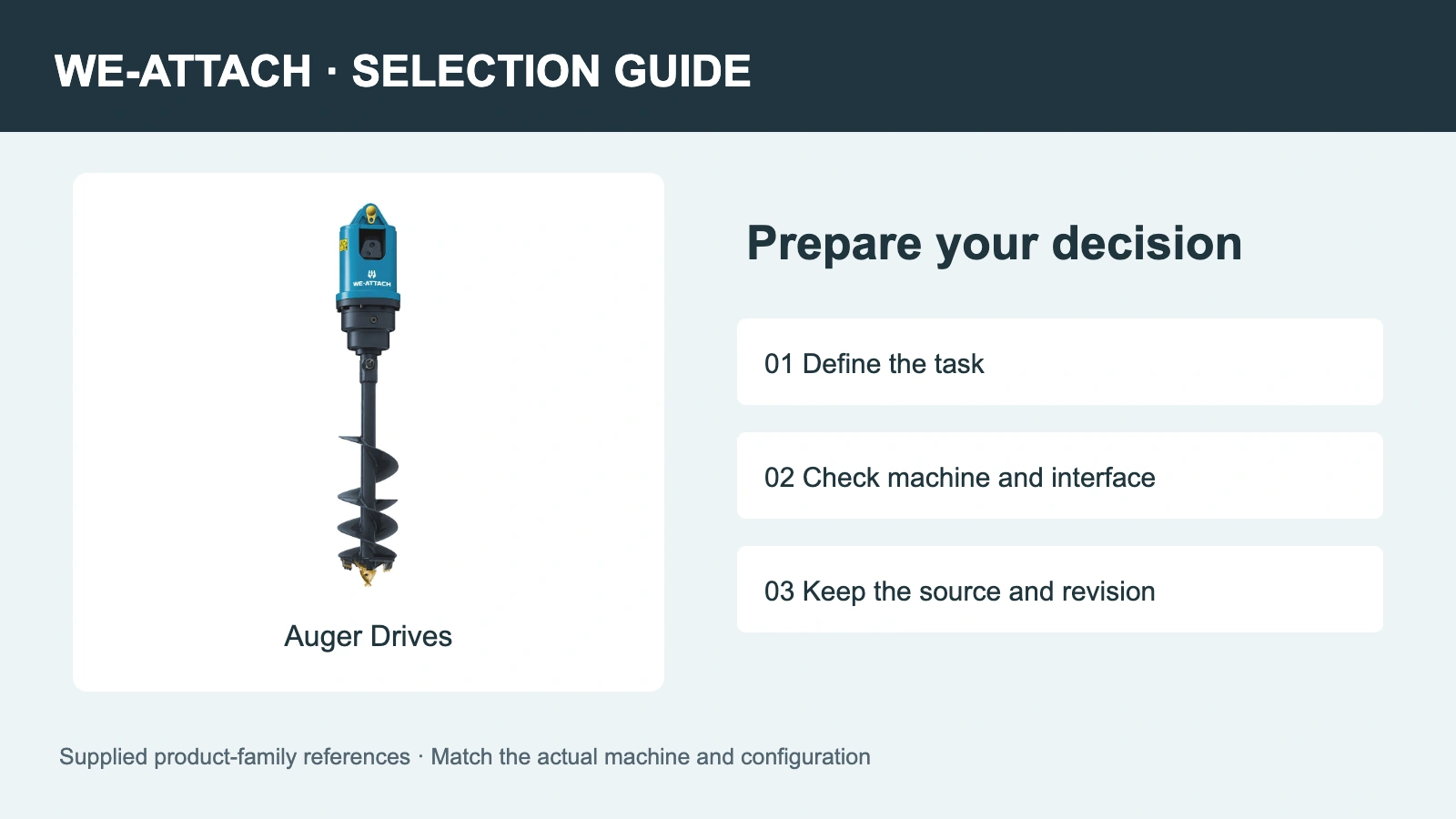
Select an auger drive as a drilling configuration
Record the required hole diameter/depth, ground description, obstructions, machine and work arrangement. The soft/medium/hard descriptions in the brochure are reference categories, not a measured geotechnical specification.
Explore ↗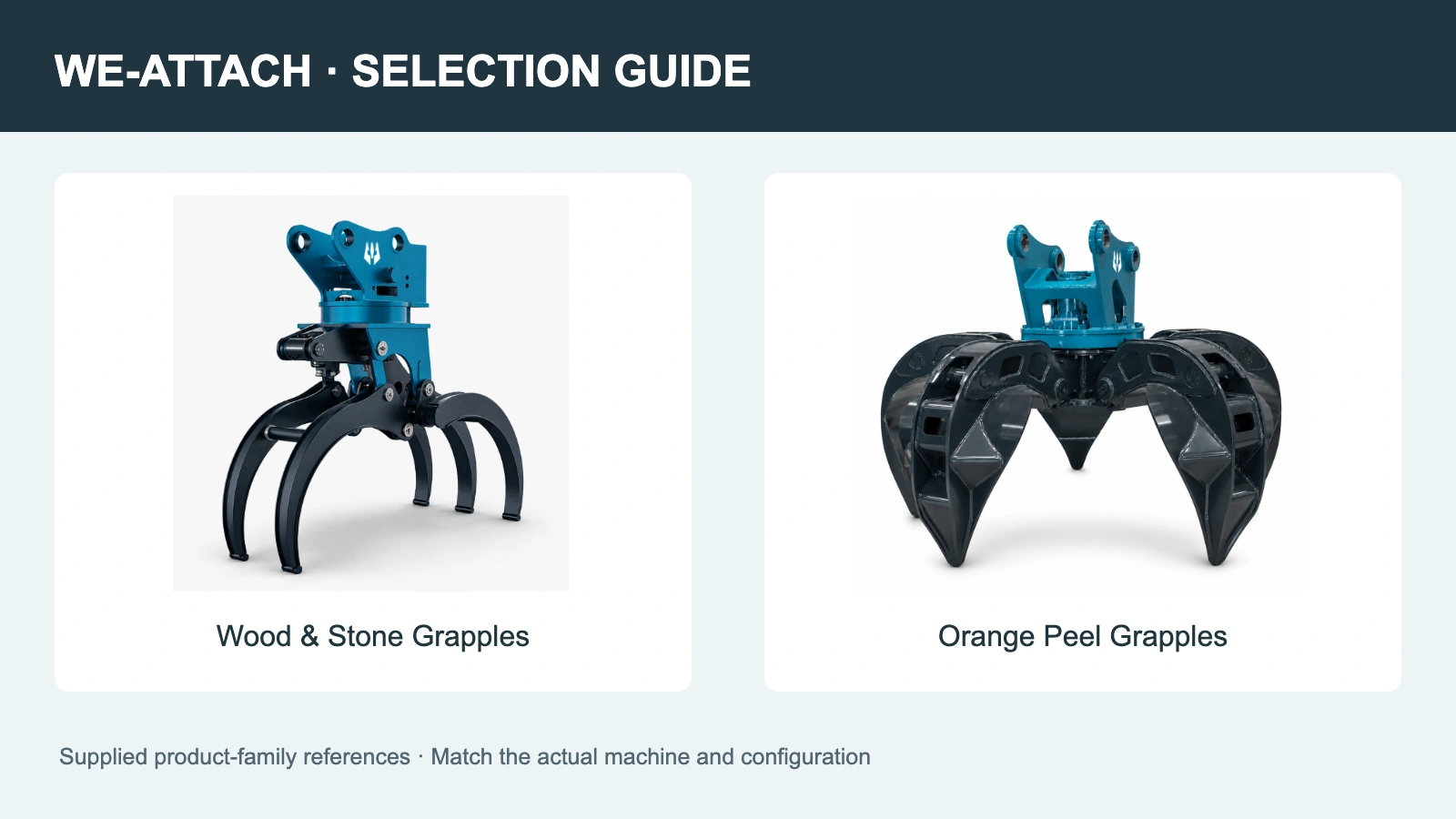
Choose a grapple by material and handling task
Separate wood/stone, logs, scrap and loose bulk material. Describe piece shape, size, density and handling method rather than selecting from the product photograph alone.
Explore ↗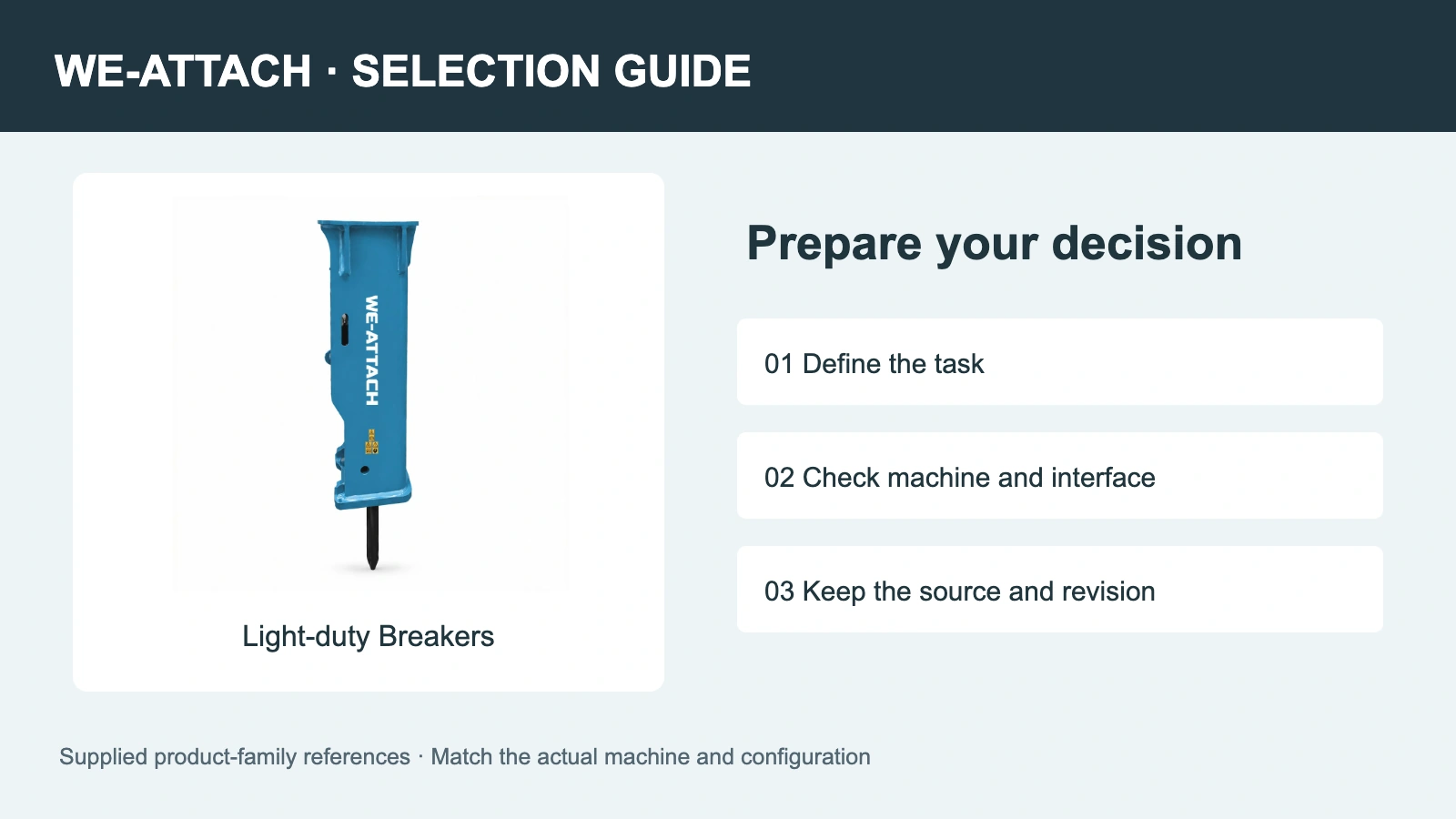
Hydraulic breaker selection and order inputs
The supplied material separates light, medium, heavy and fully hydraulic breaker references and side/top/box dimensions. Compare the same housing, bracket and tool arrangement.
Explore ↗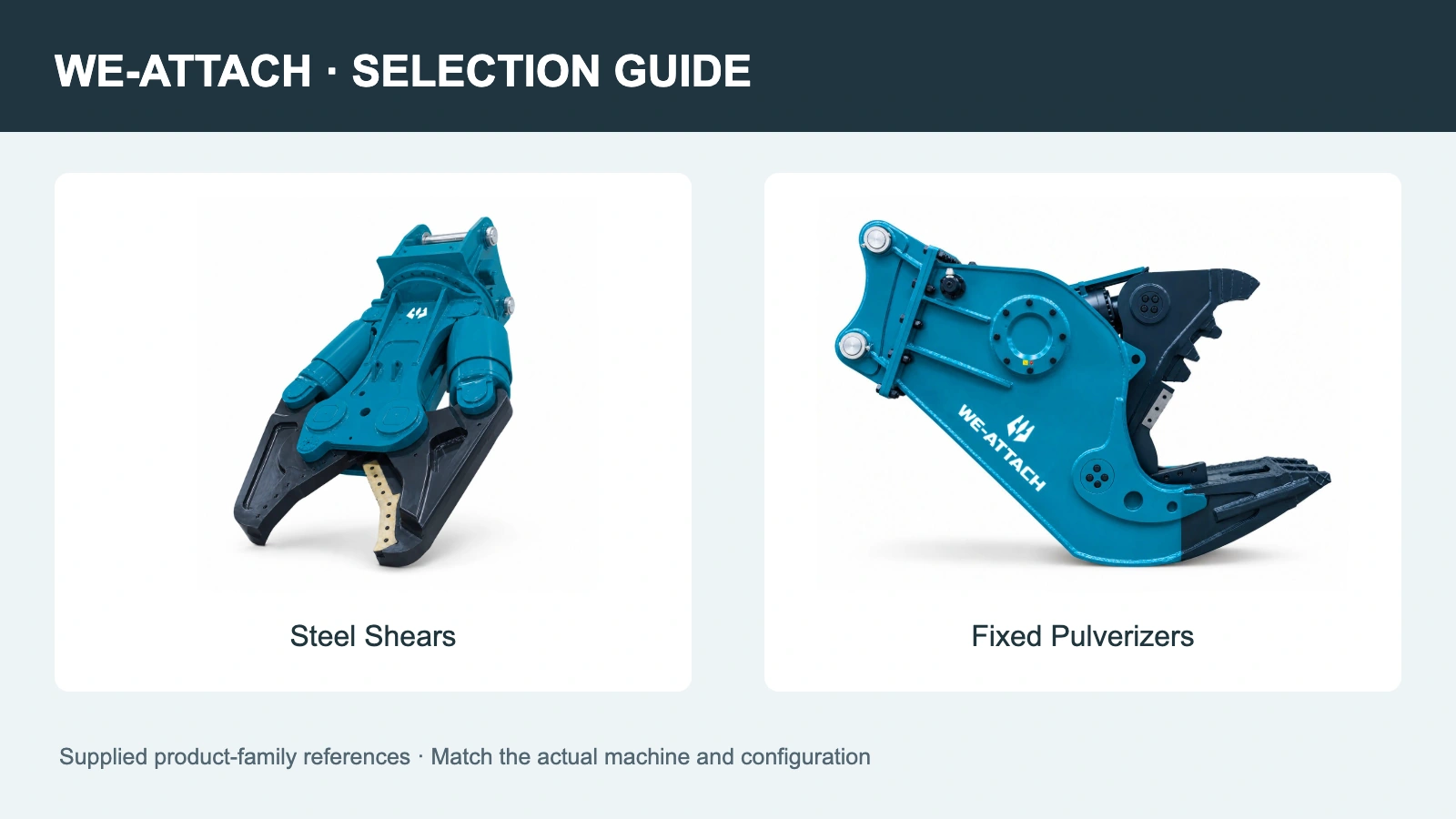
Steel shear, crusher or pulverizer: define the task
The supplied catalogue separates steel shears, eagle shears, CR/CC crushers, dismantling shears, fixed/rotating pulverizers and a magnet-equipped type. State the material and desired processing result.
Explore ↗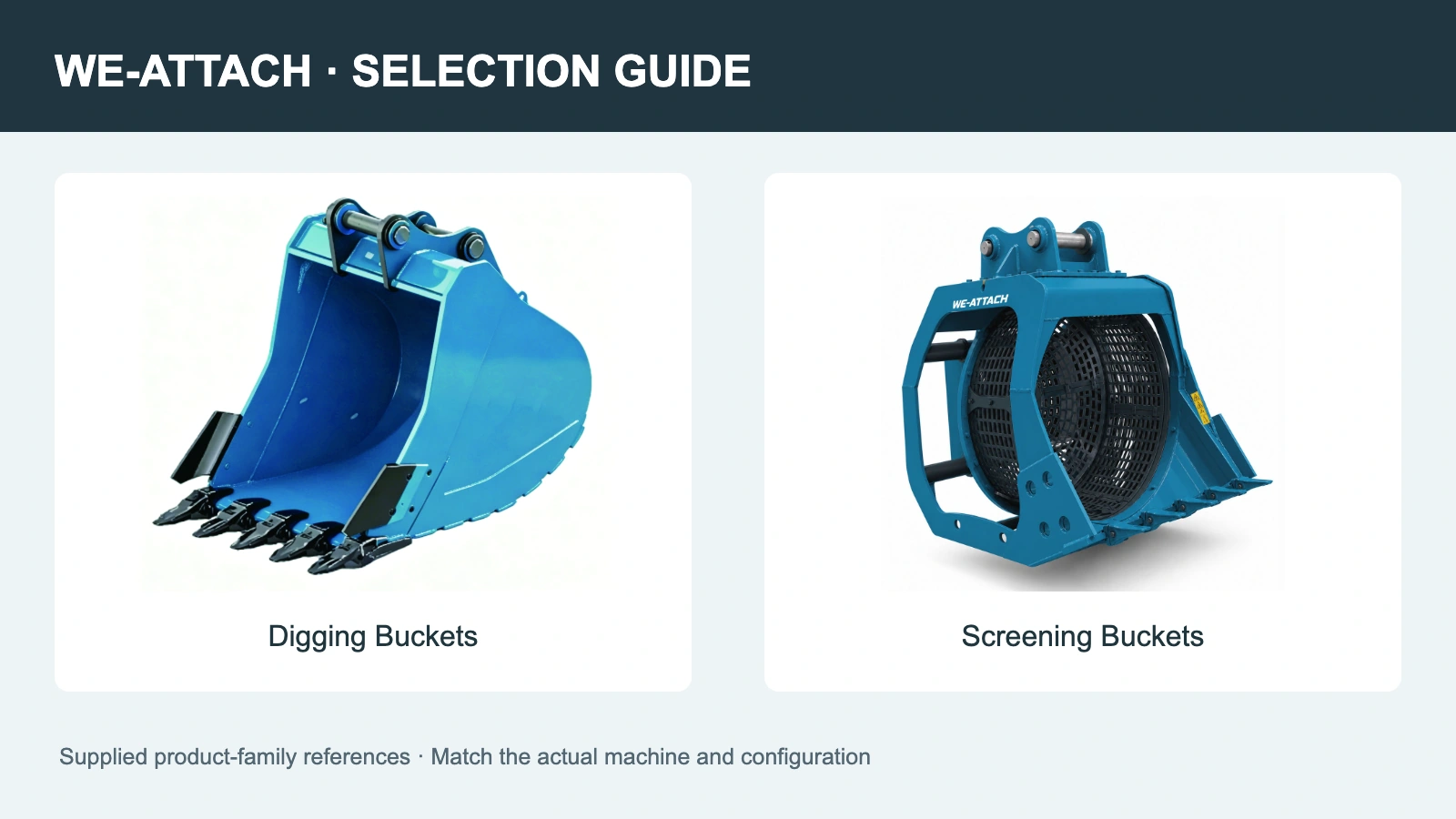
Bucket selection: task, material and interface
Crushing, screening, clamshell handling, cleaning and digging are different tasks. Supplied image families also include tilt, rock and multi-purpose configurations.
Explore ↗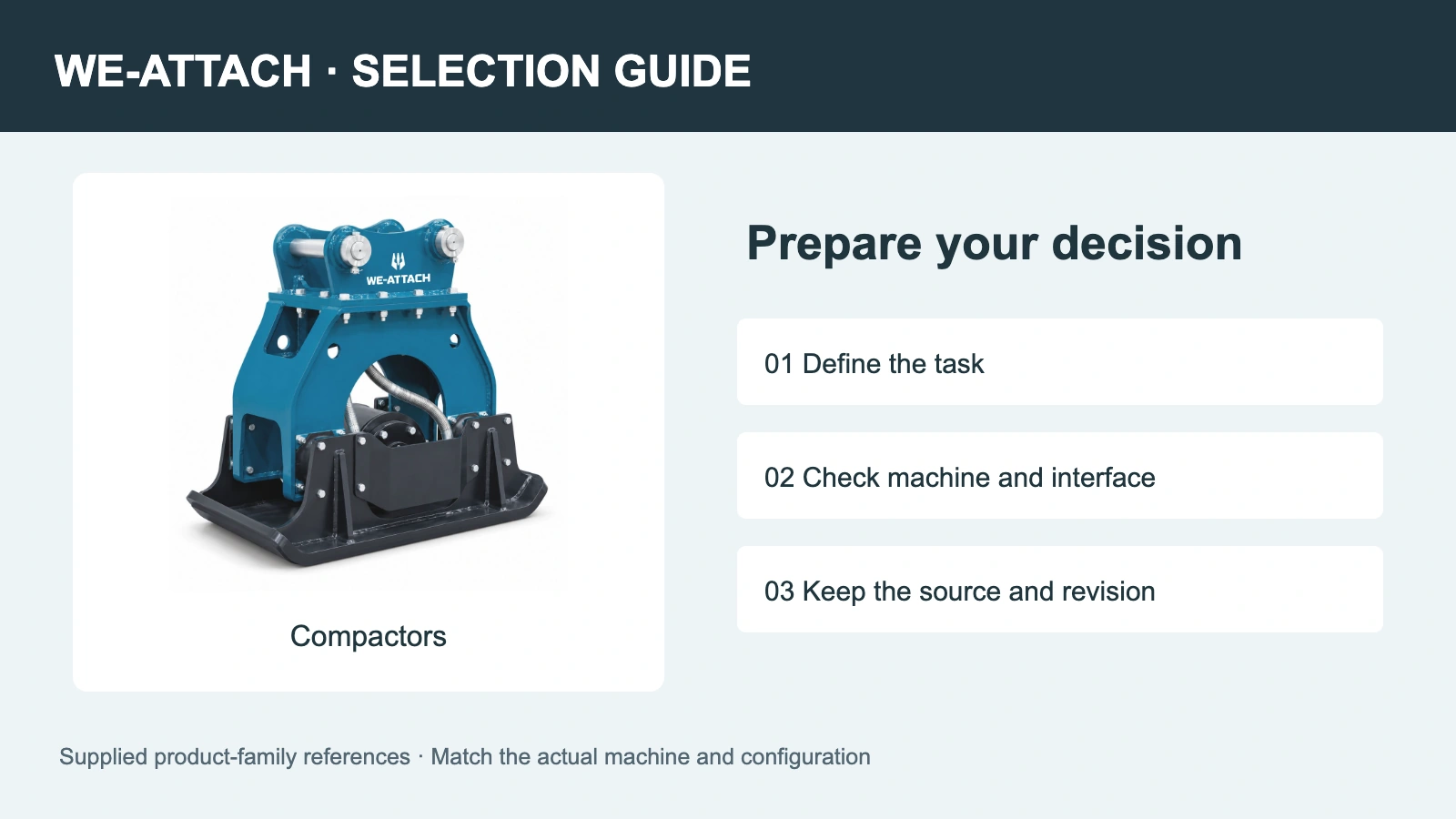
Plate compactor project information
Record compaction location, material, working area, access and the required project outcome. Catalogue compaction claims are not treated as verified site results.
Explore ↗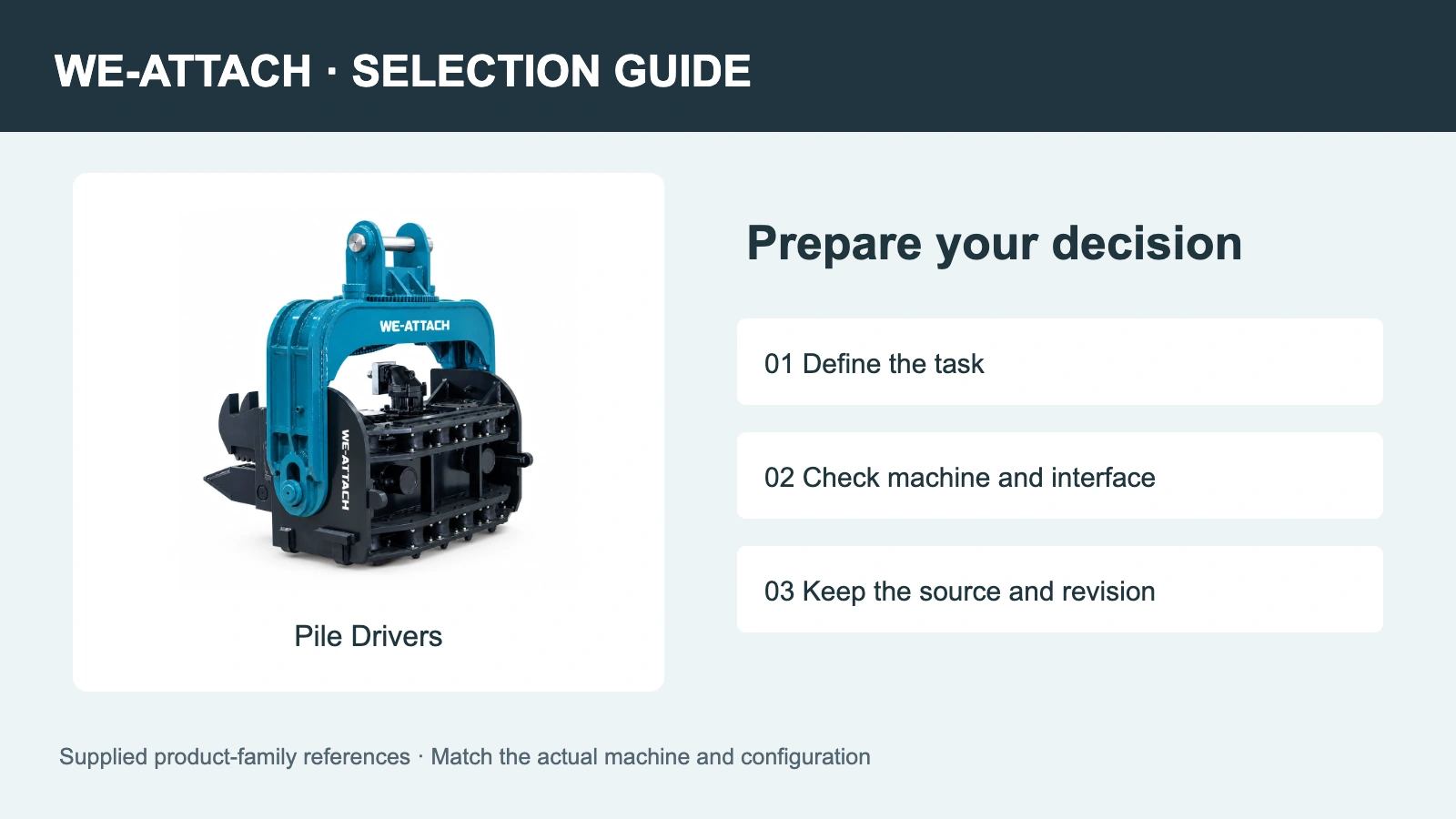
Pile driver project review checklist
Provide pile material, section/diameter, length, proposed clamp and site arrangement.
Explore ↗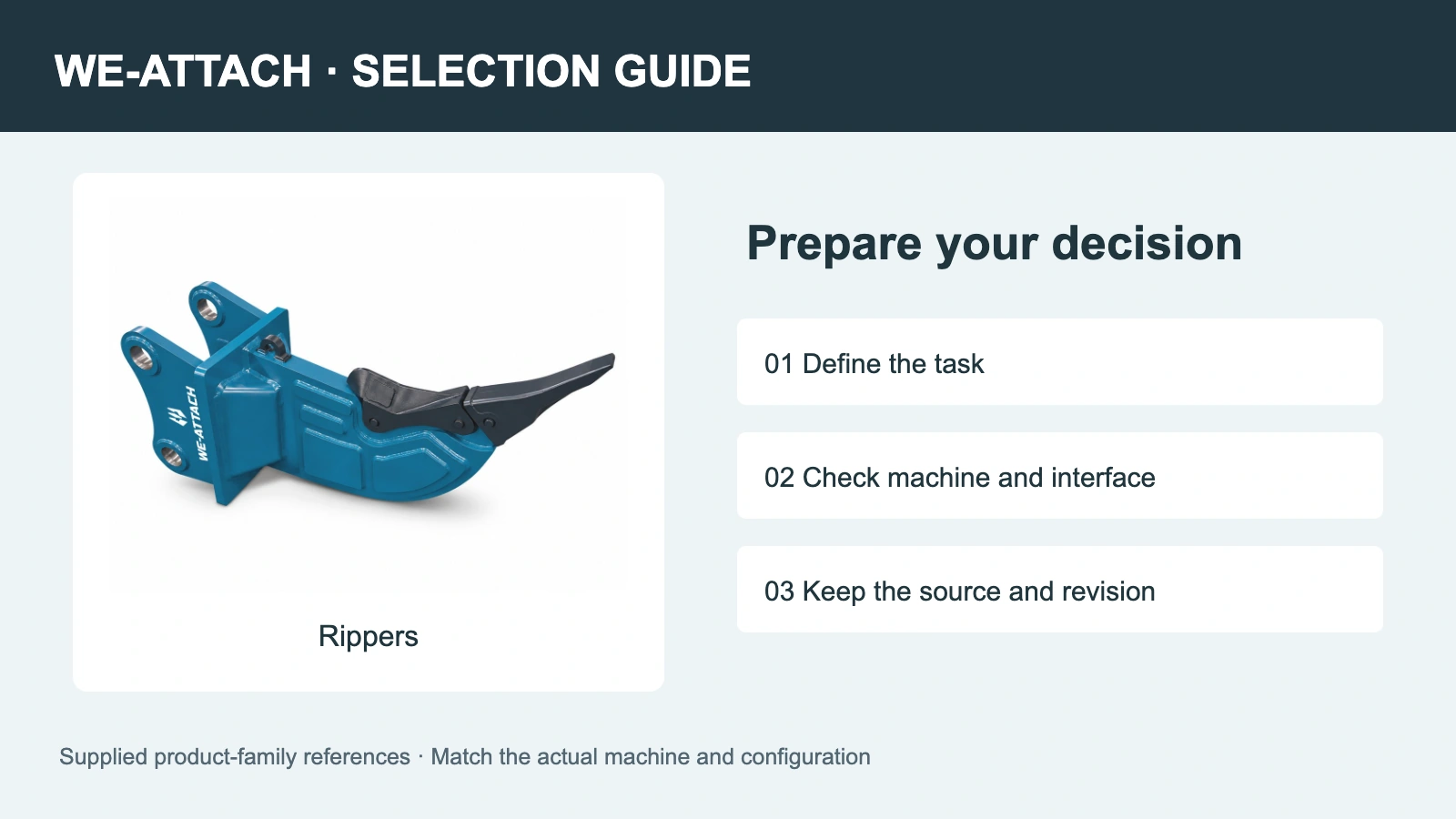
Ripper geometry and project selection
Provide the material, proposed work, machine reach and site constraints. The WR references are retained as catalogue models.
Explore ↗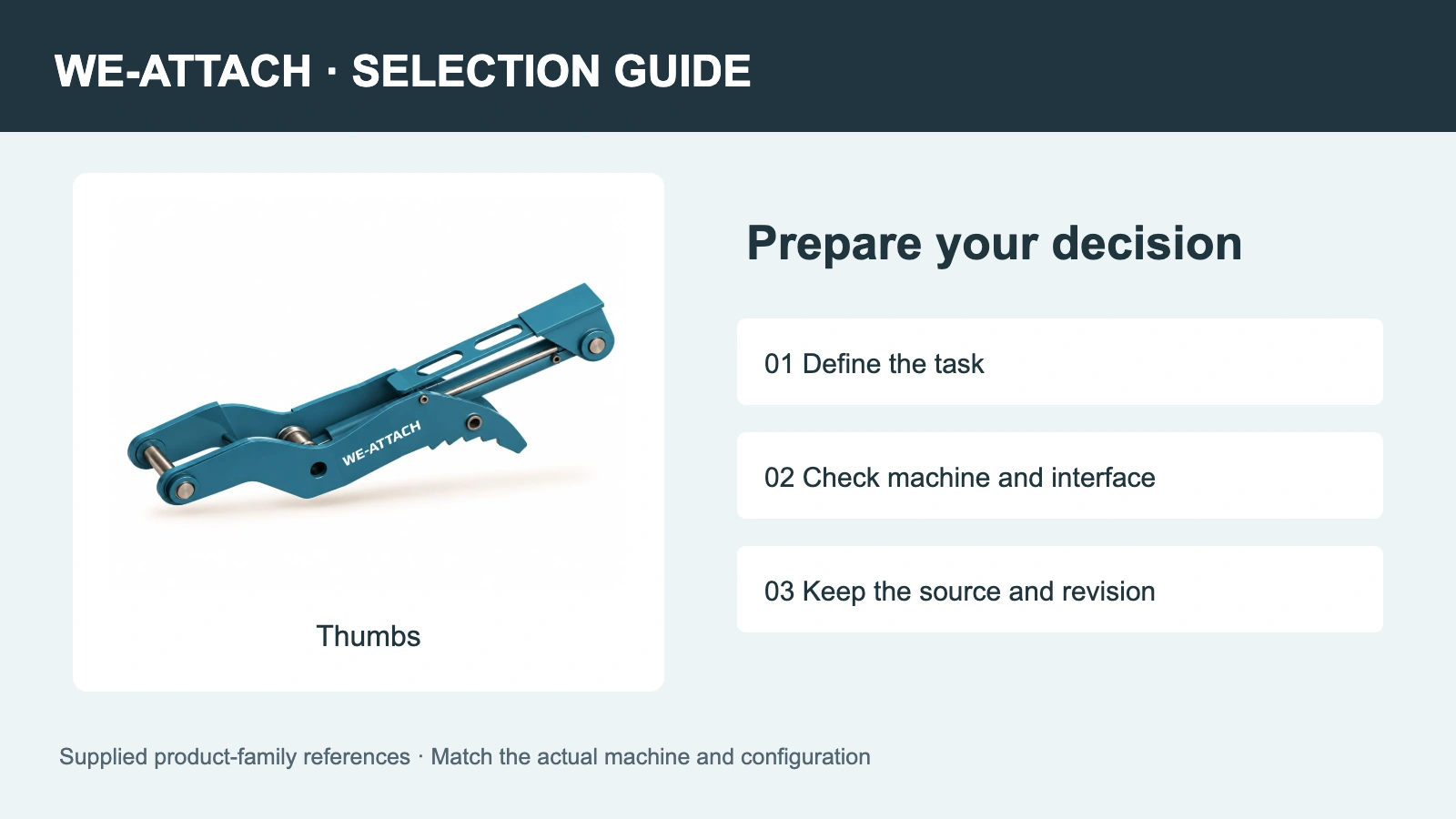
Hydraulic thumb and bucket geometry review
Provide the bucket, linkage and thumb connection geometry and the proposed handling task.
Explore ↗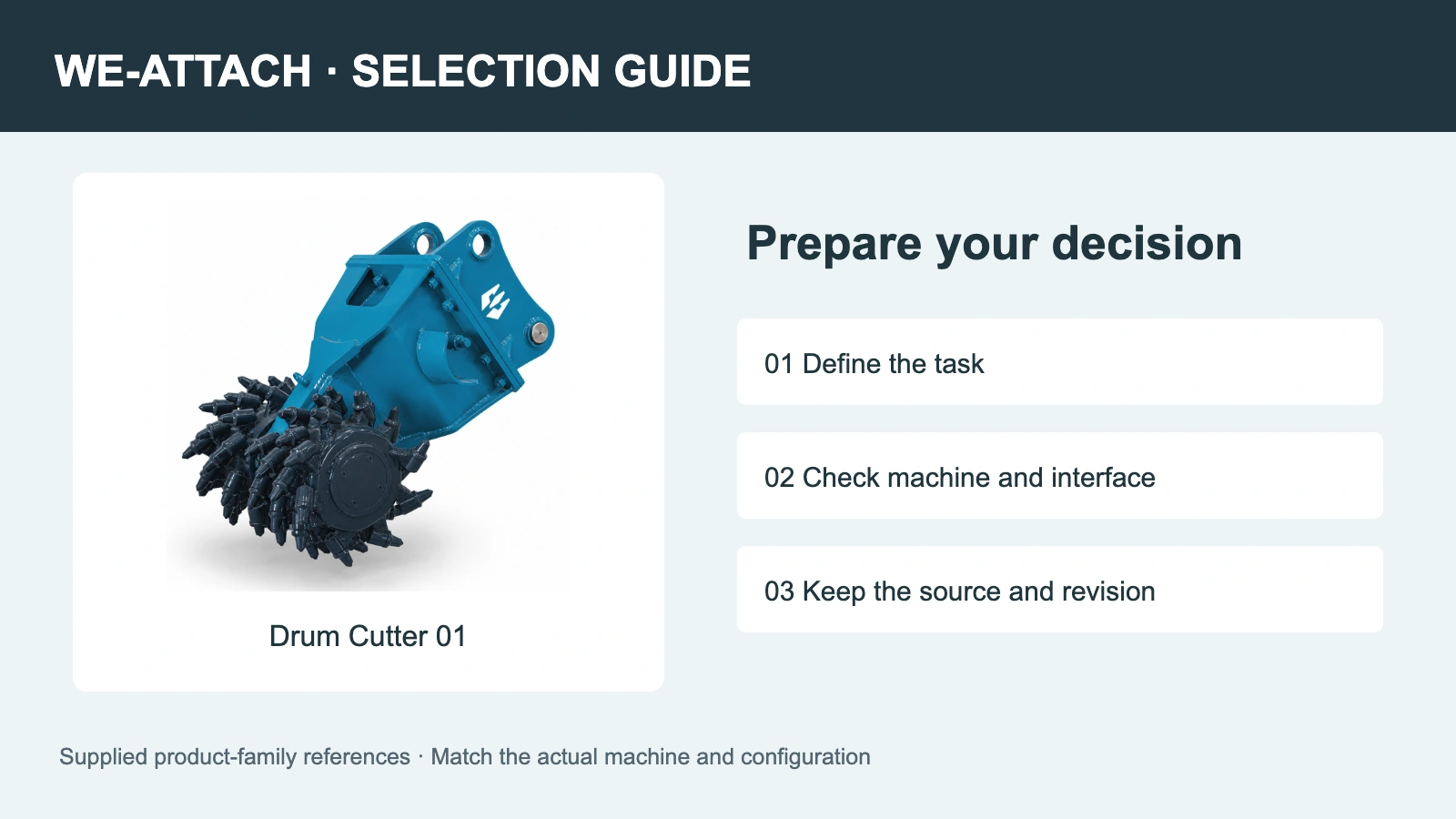
Drum cutter application and data request
Describe material, cut dimensions, access, machine and site arrangement. The supplied display images do not establish cutting performance.
Explore ↗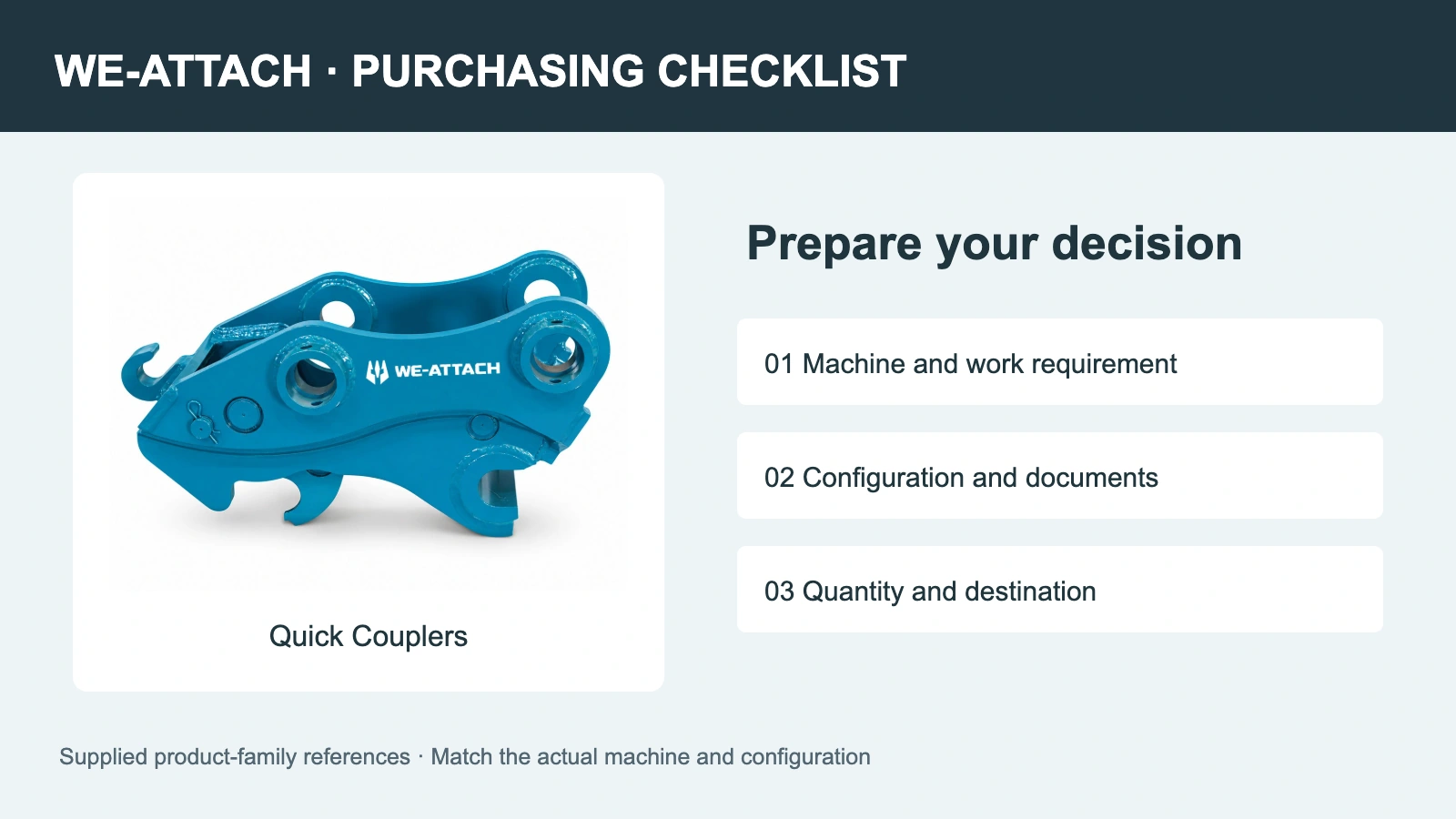
What to include in an attachment quotation request
The supplied order process covers customer identity, machine brand/model/year, installation dimensions/oil ports, working conditions, function/specification and a completeness check.
Explore ↗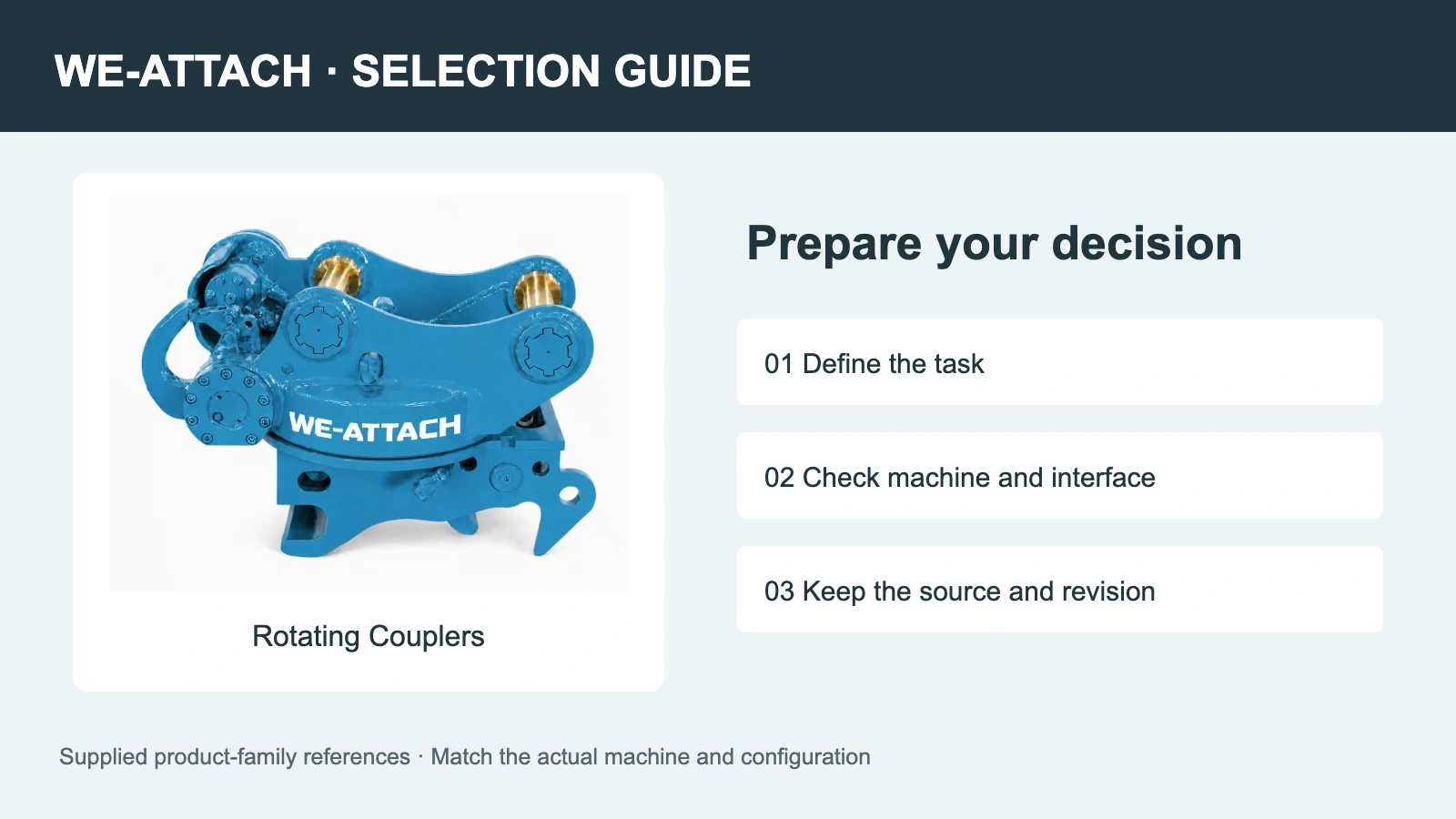
Machine and attachment compatibility information
Provide exact brand, model and year, working weight and available machine documents. Add serial information when needed for configuration review.
Explore ↗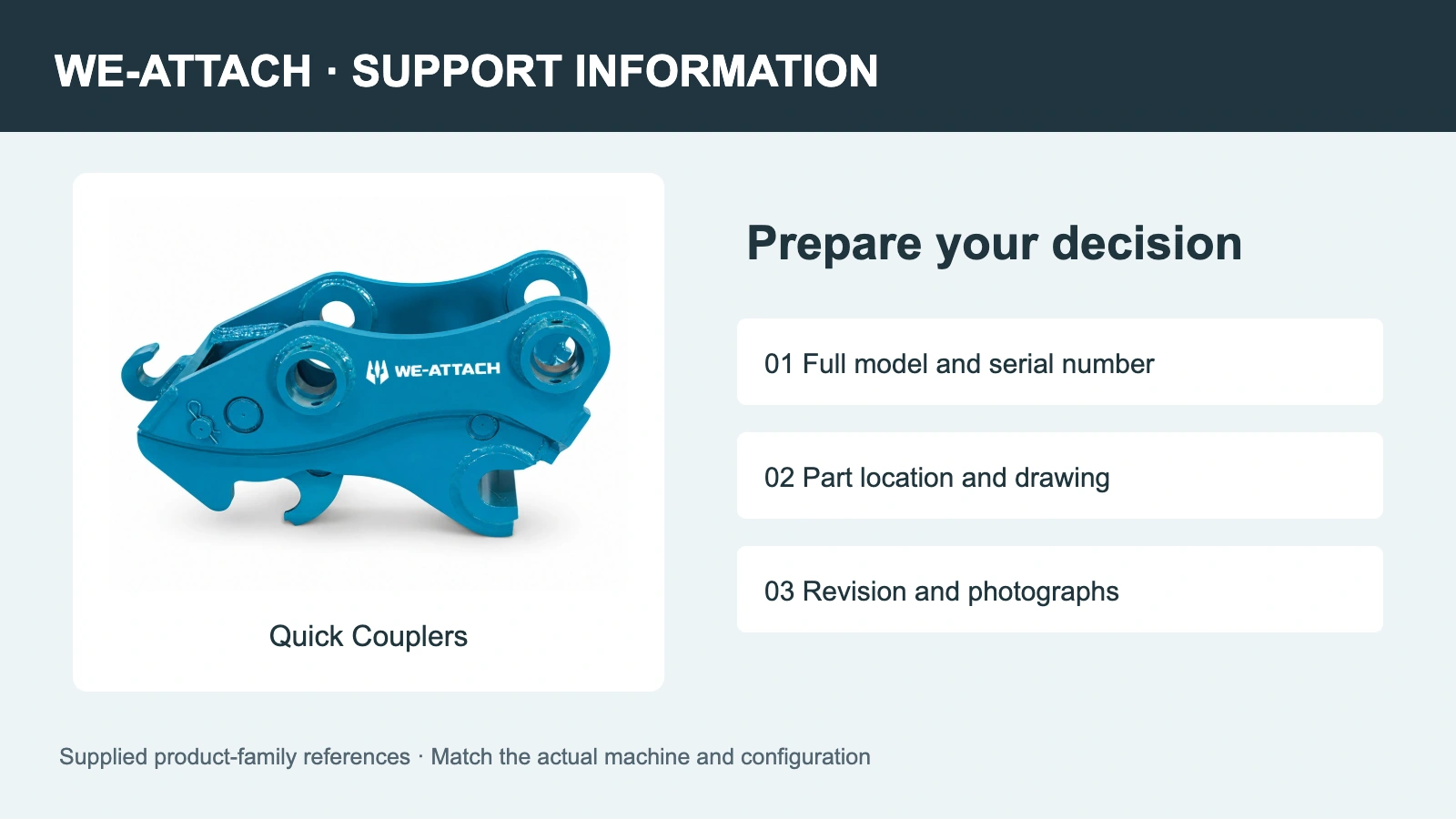
How to request the correct spare or wear part
Provide model/suffix, serial or order reference, part number if known and the current drawing revision.
Explore ↗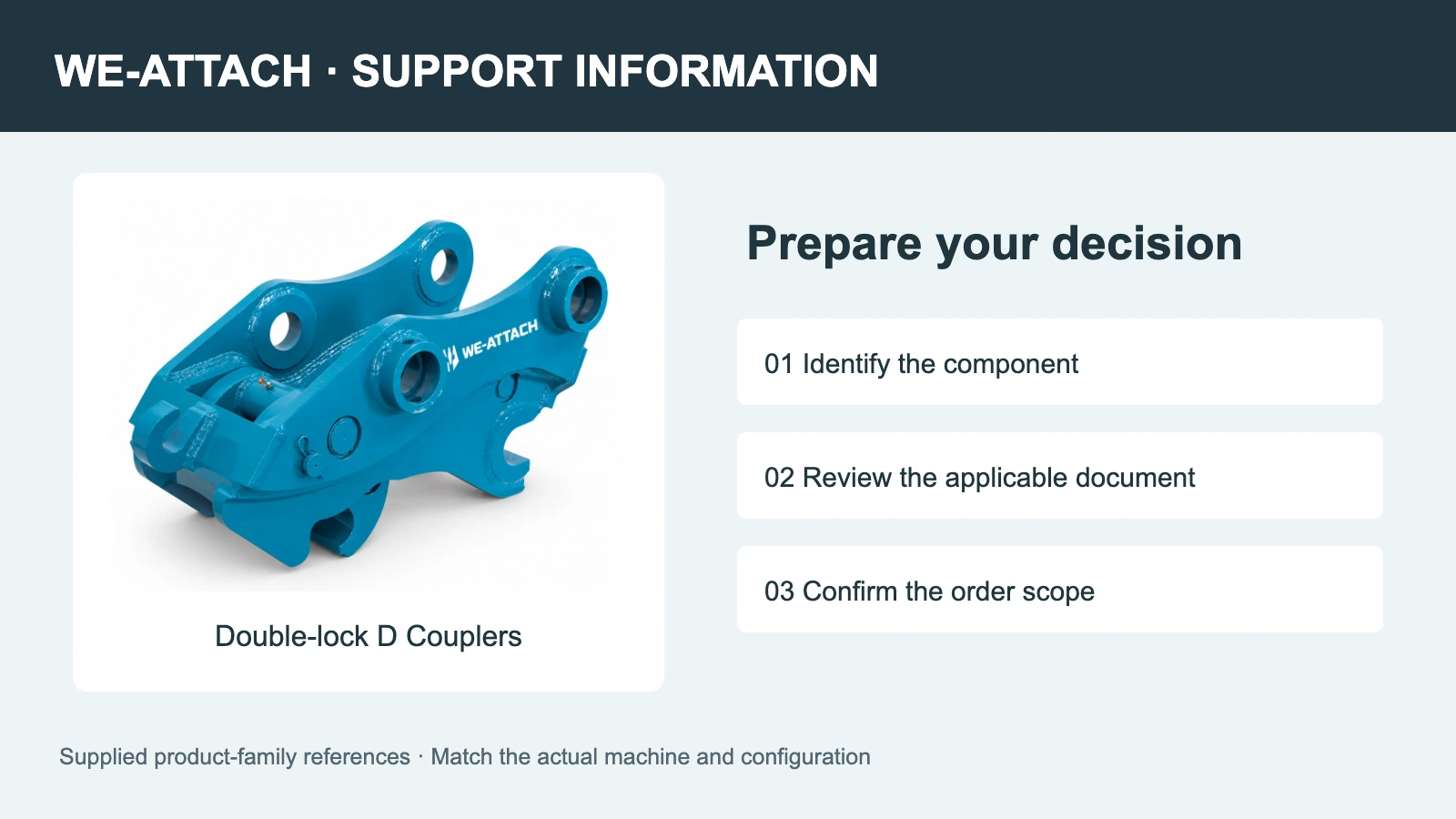
Read the quick coupler warranty by component
The supplied quick-coupler matrix distinguishes body, hydraulic lock, cylinder, valve, pins, hoses and switch. Standard and rotating arrangements have different conditions.
Explore ↗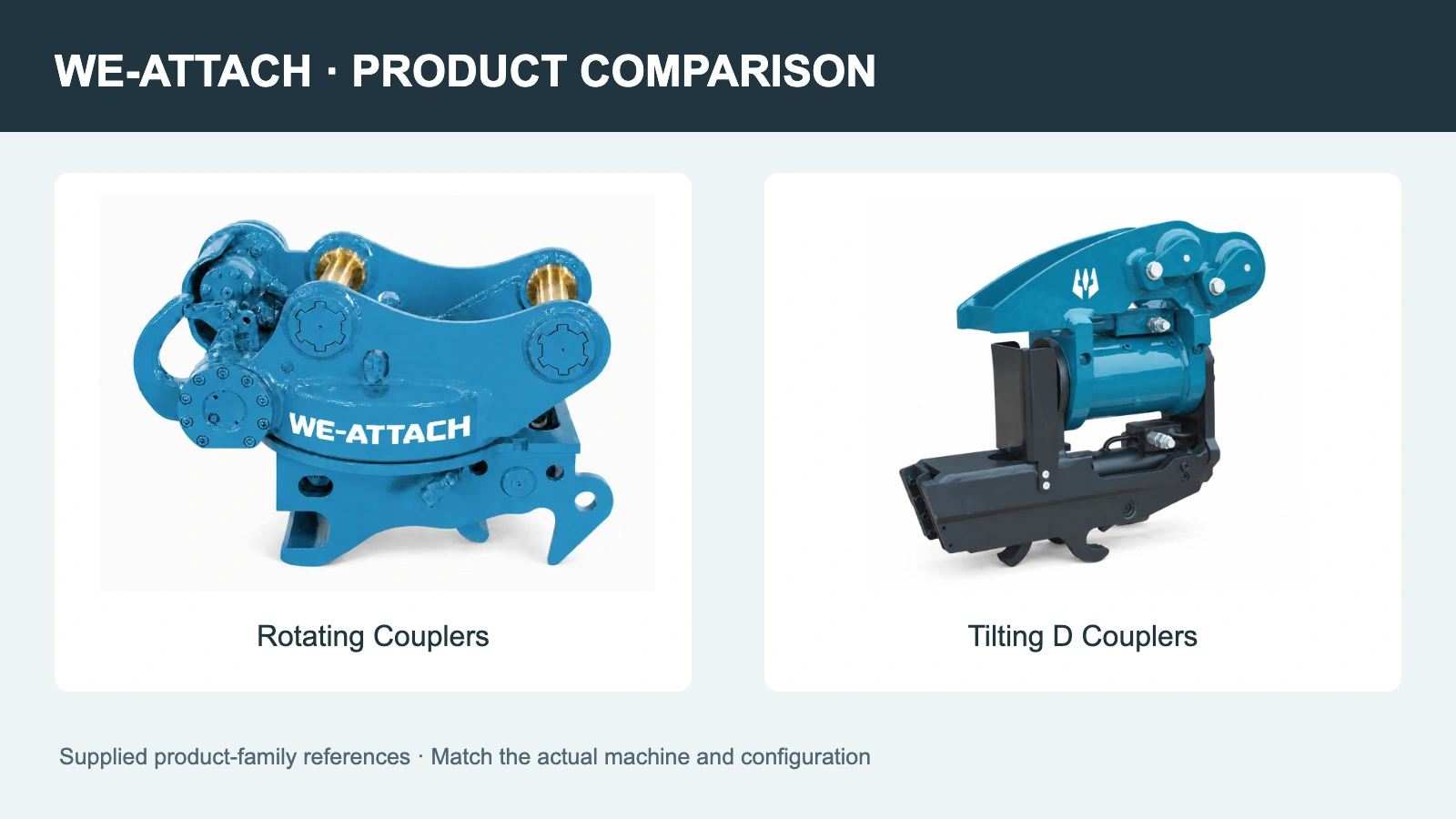
Rotating vs tilting couplers: choose the movement you need
A rotary coupler changes the tool orientation through the 360-degree rotation described in the R-series source. A tilting coupler changes the tool angle within its model-specific tilt range. These are different motions; neither label alone establishes a tiltrotator.
Explore ↗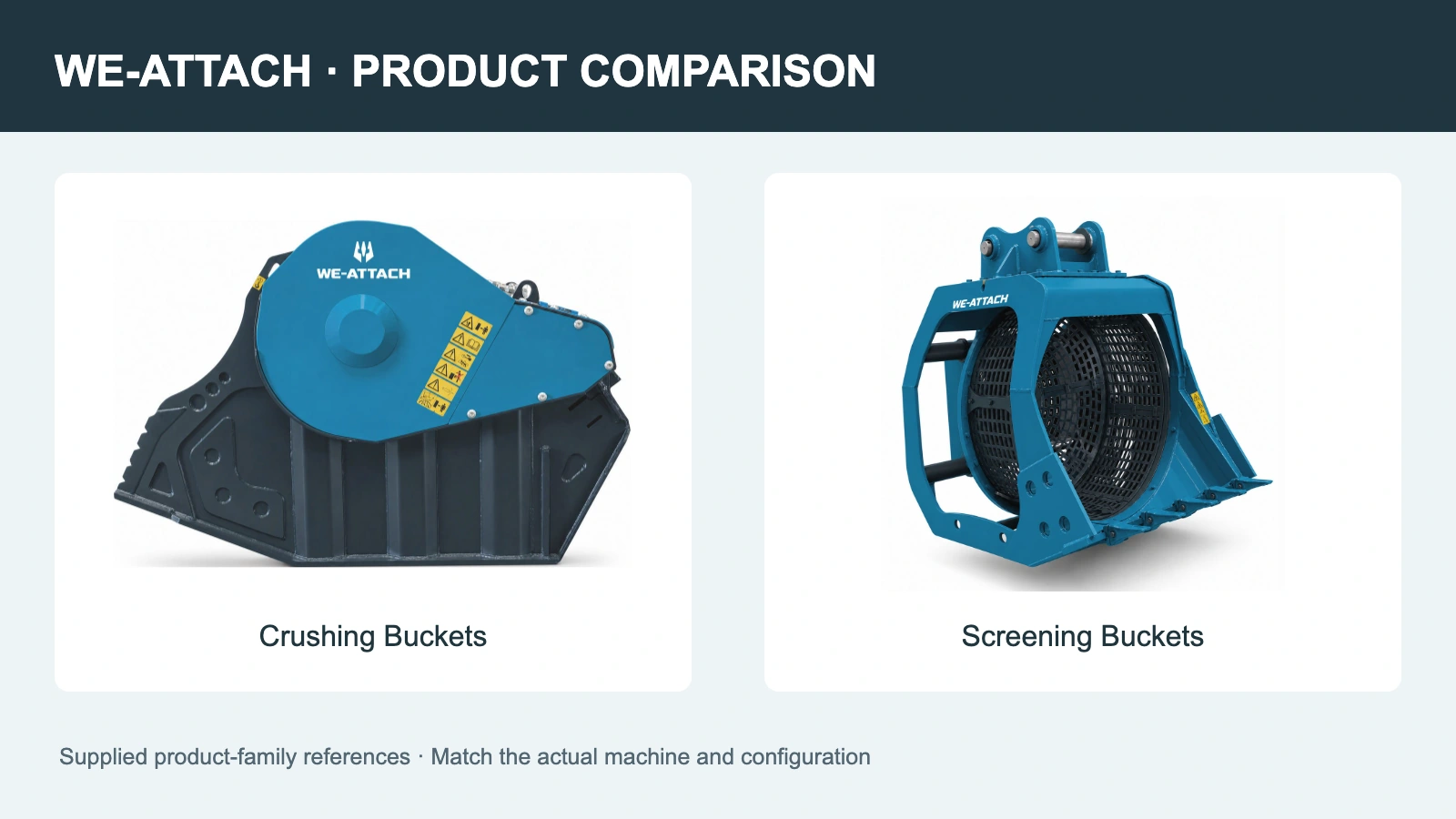
Crushing vs screening buckets: separate the process
The supplied crushing-bucket page describes breaking feed material on site. The screening-bucket page describes separating material by a screen arrangement. Size reduction and separation are different process requirements.
Explore ↗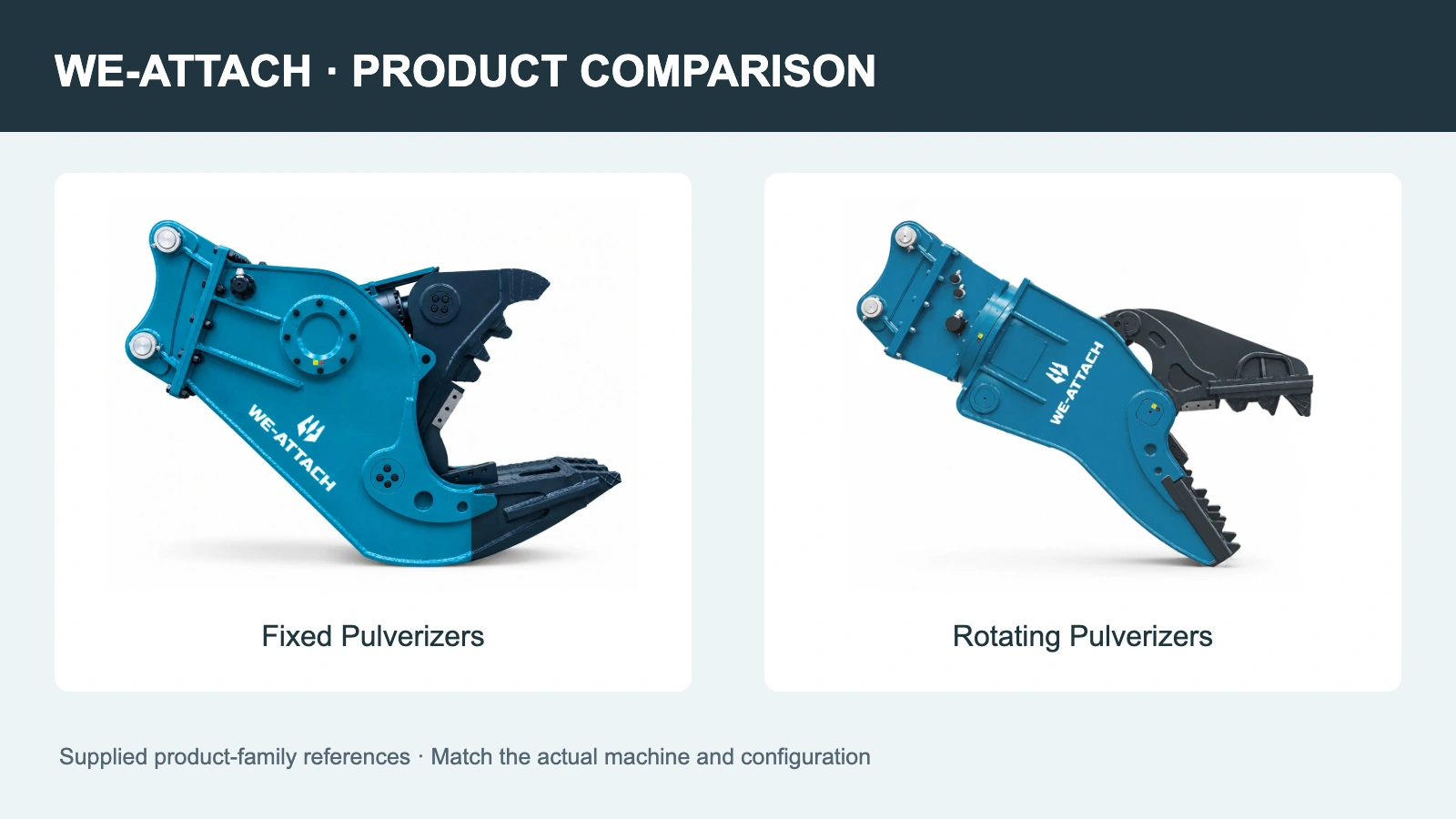
Fixed vs rotating pulverizers: task and positioning review
Describe the concrete pieces, reinforcement and processing stage before selecting the jaw and opening. The supplied catalogue separates fixed, rotating and magnet-equipped pulverizer configurations.
Explore ↗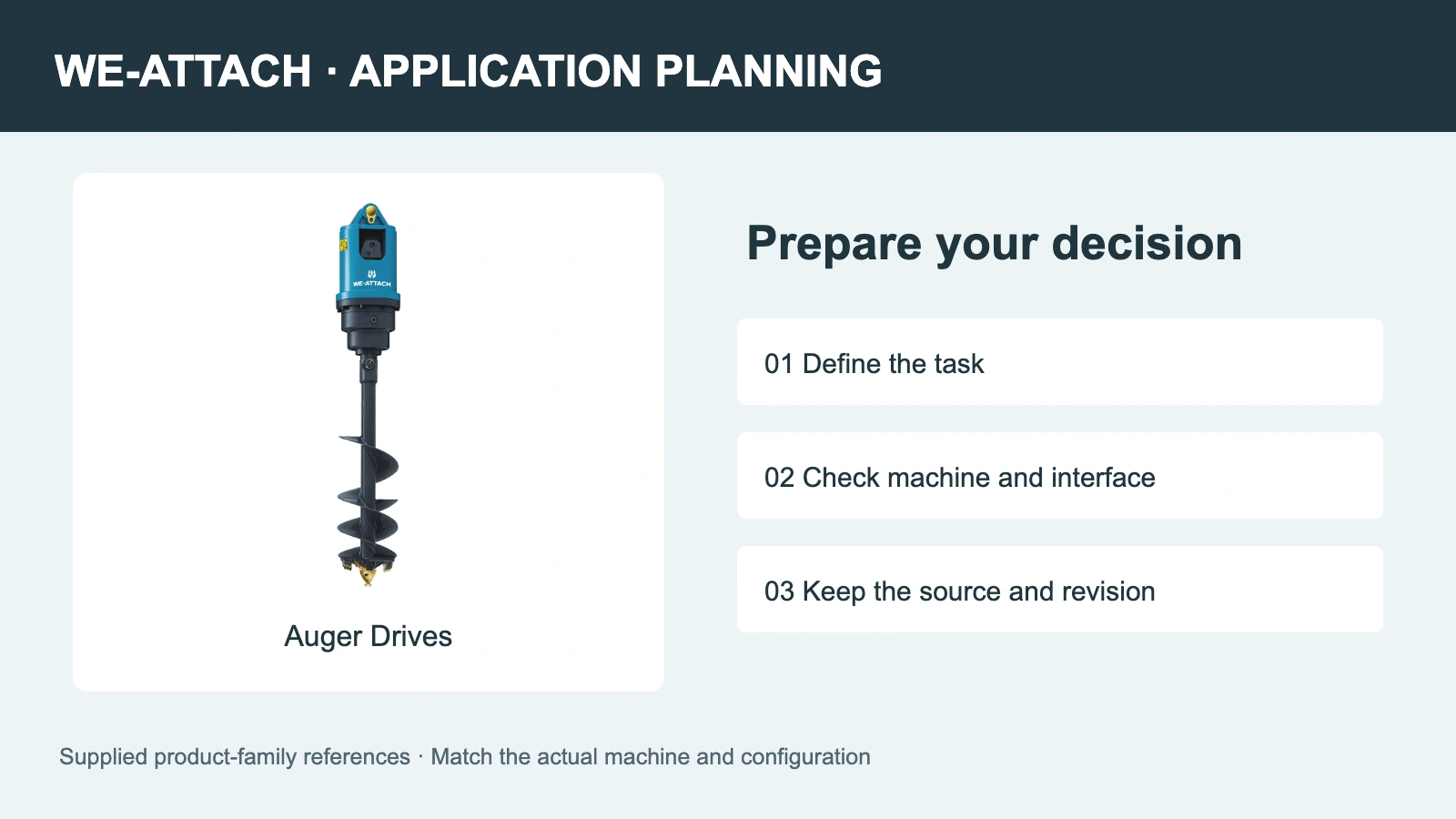
From a hole requirement to an auger configuration
Record required hole diameter/depth, ground description, access and the proposed machine. Keep the soft/medium/hard brochure labels as source reference categories rather than measured geotechnical specifications.
Explore ↗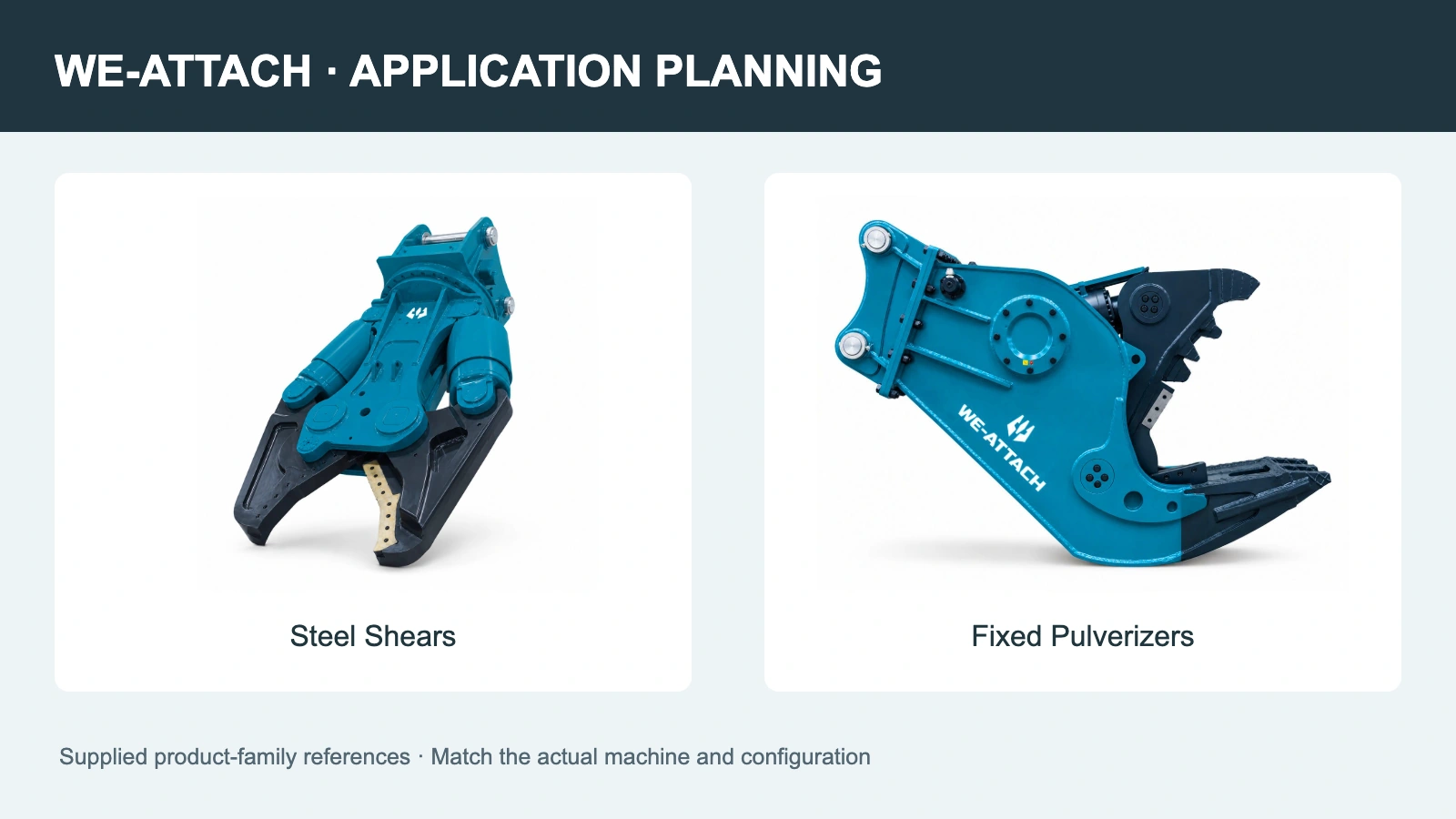
Connect breaking, concrete processing, cutting and sorting
The supplied range distinguishes breaking, concrete processing, steel cutting, vehicle dismantling and sorting/handling. Identify the material and required result of each stage.
Explore ↗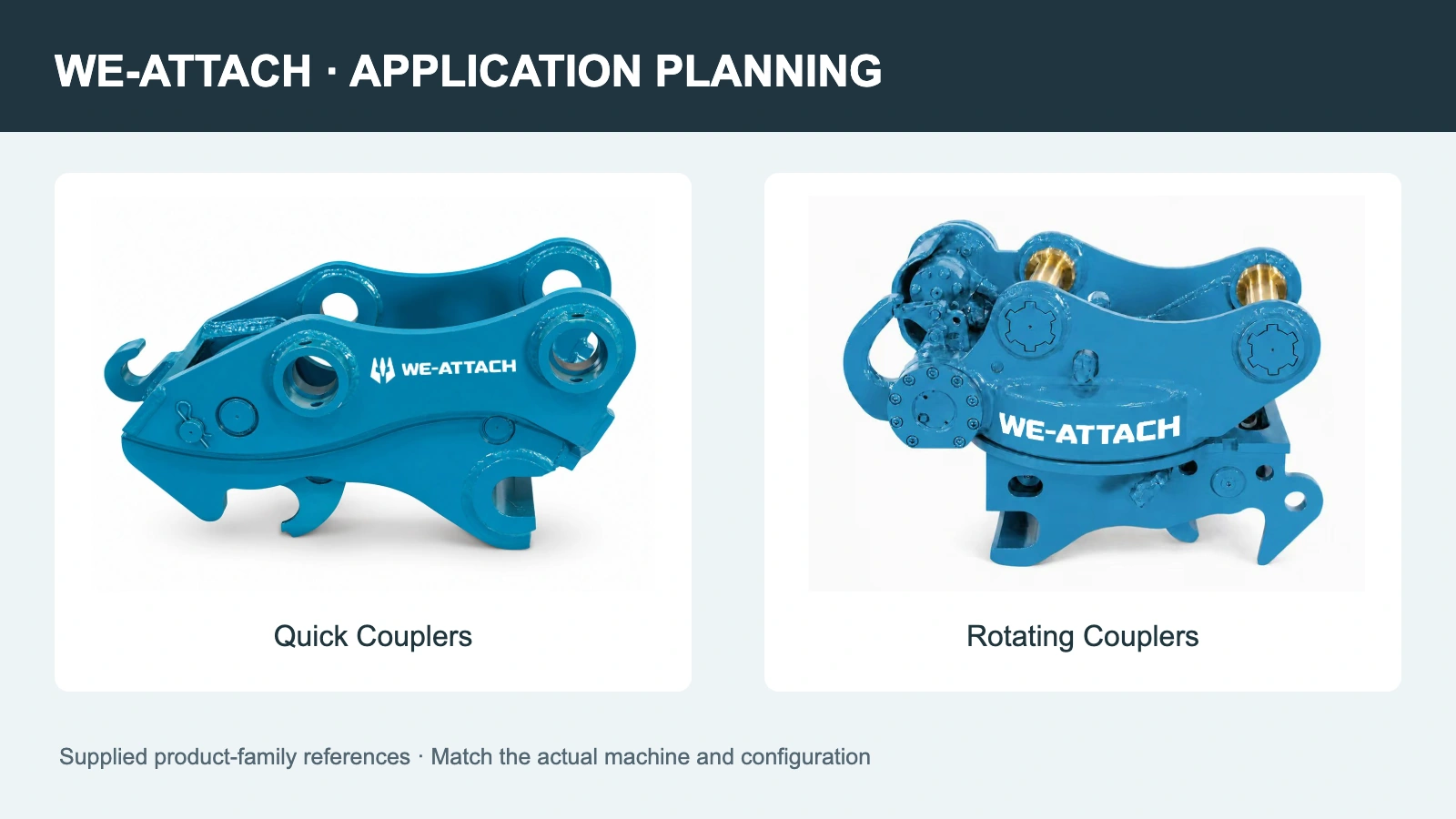
Prepare a multi-attachment fleet compatibility record
Record exact model/year, machine weight, available interface drawings and hydraulic circuit information. Group by confirmed configuration rather than tonne class alone.
Explore ↗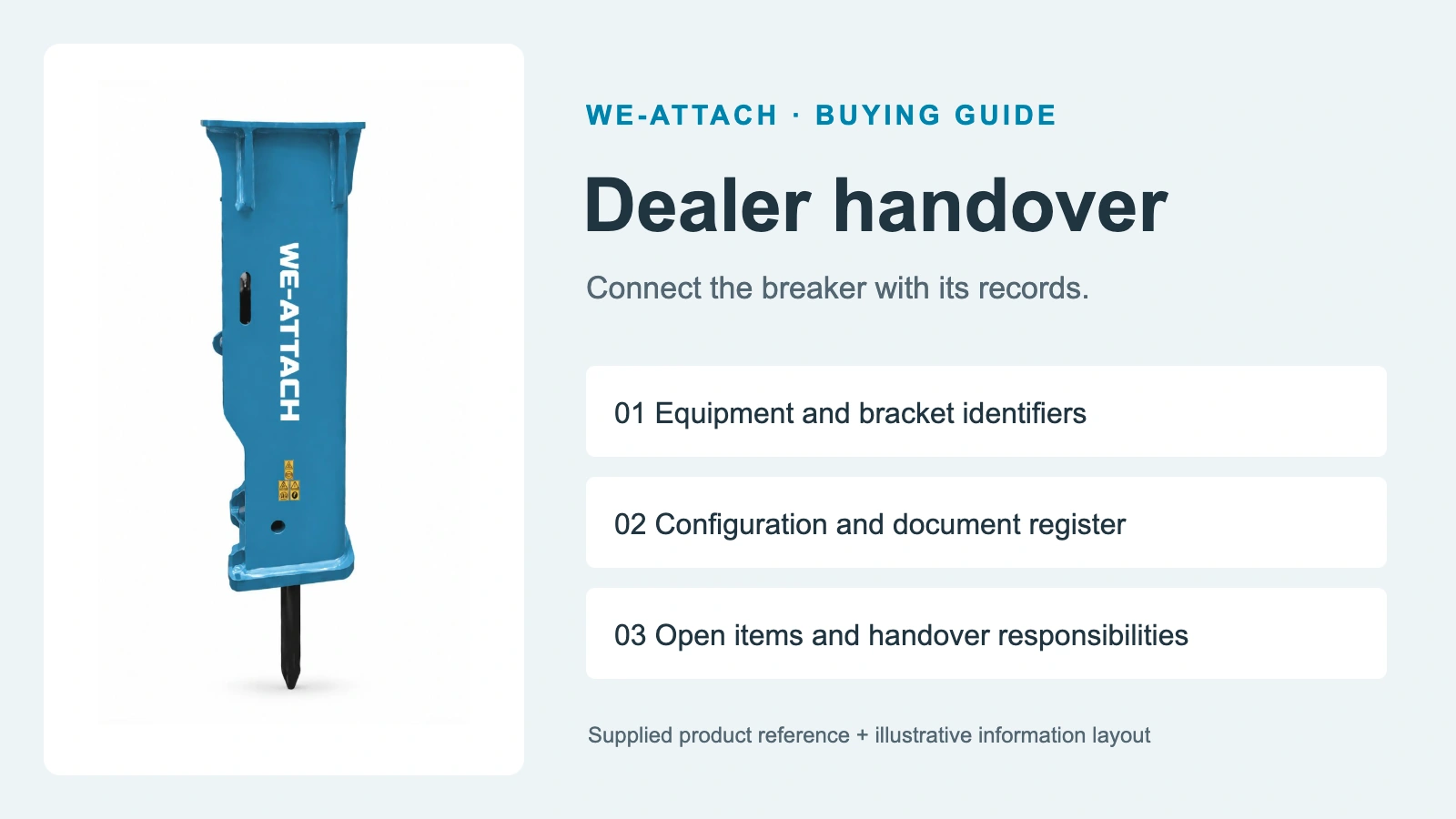
What Should a Dealer Receive in a Hydraulic-Breaker Delivery Record?
A hydraulic breaker delivery record should identify the exact hammer and mounting configuration, reference the appropriate manufacturer documents, and record unresolved issues and handover responsibilities.
Explore ↗